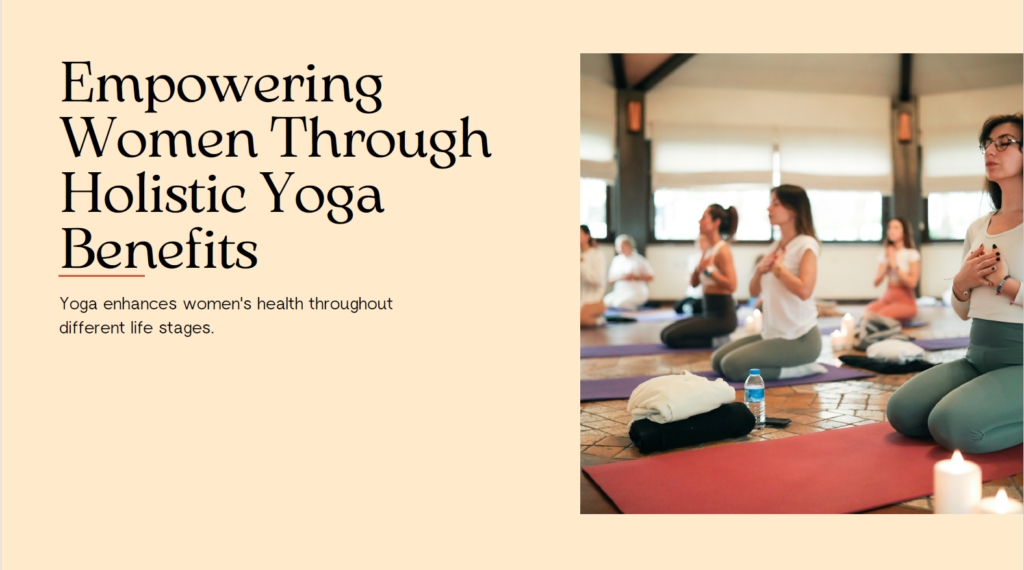
Yoga for Women’s Health: Holistic Benefits Across Life Stages
Yoga for Menopause Symptoms and the Practices That Help If you’re in your forties or fifties and your body feels different, you’re not imagining it. Hot flashes, poor sleep, stiff joints and mood swings are common during this stage. Yoga for menopause symptoms can help you feel more settled and comfortable. It works best as a steady habit alongside medical care, not instead of it. This guide covers which styles suit this stage, simple routines you can try at home, and the signs that mean it’s time to see a doctor. Yoga for Women’s Health What changes during menopause? Menopause is confirmed once you’ve gone twelve months without a period. Most women reach it around age 51. The years leading up to it, called perimenopause, can bring symptoms for several years. Falling estrogen affects more than your cycle. It can influence sleep, mood, bone density and heart health. The NHS guidance on menopause explains these changes in detail, and it’s a good place to start. Treatment options vary. Hormone therapy works well for many women, but it isn’t right for everyone. Talk to your doctor about what suits you. The Menopause Society publishes patient resources on treatment choices. Movement, stress management and good sleep habits support you whatever treatment you choose. What can help with hot flashes? Hot flashes can feel worse when you’re stressed or anxious. A calmer body may respond less intensely to them, although yoga is not a guaranteed fix. Some studies suggest yoga may reduce how often hot flashes happen or how strong they feel, but the research is still limited. You can search PubMed for studies on yoga and menopause to read the evidence yourself. Which type of yoga suits menopause best? Gentle, supported styles are usually the easiest place to start. Restorative yoga uses props and long, quiet holds, which many women find calming. Gentle Hatha classes move at a comfortable pace and teach basic alignment. Iyengar-style classes use blocks and straps to make poses more accessible. If you already practise a more vigorous style, you don’t have to stop. Just listen to your body on tired or sore days. A teacher who has worked with midlife students can adapt the sequence for you. Poses you can try at home Start with a gentle, fifteen-minute routine. Move slowly, use props, and stop if anything feels sharp: Staff pose (Dandasana): Sit tall with your legs straight and your spine long. Hold for five breaths. Seated wide-angle pose (Upavista Konasana): Open your legs and fold gently forward. Keep your back long. Fixed angle pose (Baddhakonasana): Bring the soles of your feet together and let your knees drop open. Reclining fixed angle pose (Supta Baddhakonasana): Lie back on bolsters or cushions for a restful version of that shape. Hero pose (Virasana): Sit between your heels, using a block or cushion if your knees need support. Skip it if your knees are sore. Reclining hero pose (Supta Virasana): Lean back on your forearms or a bolster for a softer option. When should I see a doctor? Some symptoms need medical attention. Speak to a doctor if you notice any of these: Any bleeding after menopause, or heavy or irregular bleeding Hot flashes, sleep loss or mood changes that disrupt your daily life Pain during sex, or dryness that doesn’t improve Persistent bloating, pelvic pain or unexplained weight loss Joint pain that is severe, swollen or getting worse For more guidance on when to seek care, see the American College of Obstetricians and Gynecologists women’s health resources. Add Your Heading Text Here