Blogs

Blogs

The secrets of yoga: A fight with diabetes

“Diabetes is not curable. But you can keep it at bay! It is early in the evening. You just had a late, heavy dinner, and you are full, but something is still missing. You just can’t put your finger on it, and it suddenly flashes on you – you missed your dessert-the eternal ‘muh meetha (mouth sweetening)’ moment. You stare into the fridge, the light illuminating frozen dinners and boxes of leftovers, and then your eyes go to what you have been searching for – that box of sweets that your relatives had brought the other day, bless their hearts. As you dive into the divine world of ‘pedas’ and ‘rasgullas,’ the old newspaper wrapped around the packet catches your eye. Right before you can sink your teeth in, you see an article on Diabetes peeking into your soul, questioning your decision with a headline that announces, ‘1.5 million deaths are directly attributed to diabetes each year’. You remember talking with your relatives yesterday about how their 48-year-old neighbor had kidney failure due to high sugar and died last week. You congratulate them on their audacity to bring sweets, and an eternity of inner monologue later, you keep those sweets, untouched and virgin-like, back in the fridge as you stare at them longingly. At the same time, you close the fridge door and walk away. Excuse my amateurish attempt at humor, as there is nothing humorous about Diabetes. There are currently nearly 80 million people with Diabetes in India, and by 2045, 135 million Indians will have the disease. Worldwide, the number is even scarier, as according to the WHO, 422 million people around the globe have Diabetes, and the number is expected to rise. Diabetes is a “slow poison.” It is a disease associated with other conditions like high blood pressure leading to heart attacks, kidney failure, blindness, and other ailments. Diabetes is not curable, but it can be managed. Therefore, it is of utmost importance to understand how you can live a decent lifestyle by enjoying sweets in moderation and at the same time get your Diabetes controlled. Unfortunately, there is no drug known to mankind that can cure Diabetes. While a significant armamentarium of medications can help control your blood sugar, some come at the cost of having side effects. Many effective diabetic drugs have fallen into disrepute because they do not protect the heart. The present dictate to pharmaceutical manufacturers is only to discover medicines that have proven protection for the heart. The simple reason being a diabetic mostly dies due to heart disease or its complication. It is essential to understand that medications, even when taken appropriately, do not cure or treat diabetes mellitus. This disease is called a lifestyle disease, and its treatment requires extensive lifestyle changes, with medications secondary to it. Millions of people have successfully been able to keep their Diabetes absolutely in control after engaging in radical lifestyle changes. Though it sounds complicated and impossible, it will disrupt your regular work and almost certainly entail giving up your profession. Fortunately, such fears are uncalled for because all you need to do is practice yoga for half an hour 4/5 days a week, including 10 minutes of mindfulness and meditation. You might be thinking that it is a long prescription. It is not. Unlike our teeming millions of “asana experts,” that fill the yoga space in social media with their verbose claims of how they do challenging yoga postures (asanas) or post pictures of themselves bent at every joint. Unfortunately, none of that is yoga! More importantly, this is different from the yoga you need to do. Whether you would like preferable call some of them ” monkey dances” is something I will let you decide. Yoga is a practical and effective lifestyle modification that involves Asanas (Postures), Dharana (Mindfulness), and Dhyana (Meditation). Whether you believe it or not, at least seven of the eight components of yoga are essential to induce a lifestyle change. Yoga space has been unfortunately polluted by half-baked experts who need clinical training. Whether yoga works or not in Diabetes is not based on my personal experience. I would then be no different from the “erudite” neighborhood yoga practitioner or Guru who believes their experience is all that is required to prove that it works. Unfortunately, clinical medicine, including yoga therapy, is a scientific proposition propelled by research and not by witch doctors’ voodoo medicine! Regular walks, combined with specific yoga poses like Dhanurasana and multiple twisting poses, can be helpful for people with Diabetes, as it helps burn off the excess sugar that has built up in their bodies and stimulate insulin production. In addition, Surya Namaskara, or Sun Salutation, is a sequence of 12 powerful yoga asanas, which is another effective way to reign in your rising blood sugar level. However, it can be modified by doing a faster variation that consumes more calories. Another point on which modern medicine agrees with yogic principles is that stress exacerbates Diabetes. When stressed, your body releases hormones that can cause blood sugar to increase and blood pressure and heart rate. In addition, multiple studies have found that yoga can improve anxiety and stress. Depression and anxiety are common reactions to stress, and practicing yoga regularly can-do wonders for your mental health. However, asanas or postures have minimal effect on reducing stress on bringing about respite to mental aberrations like anxiety or depression. Thus, it is essential to practice the entire gamut of yoga, which includes concentration, mindfulness, and meditation. Last but not least, ‘you are what you eat’ might be quite literal for people with Diabetes. Indulging your sweet tooth urges might make you sweeter, literally, by increasing the blood sugar level in your body. This, unfortunately, has multifarious unseen ramifications, including blocking blood vessels leading to heart attack, stroke, or even amputations! People who have Diabetes should be aware of how essential it is, in addition to their yoga practice, to maintain a disciplined approach

Blogs

When modern science meets ancient wisdom: Key to a balanced and vibrant life

In the bustling streets of ancient India, a spiritual revolution was quietly taking place. As the sun rose over the horizon, men and women gathered to practice a series of physical postures and meditation techniques to transform their minds, bodies, and spirits. This is yoga, a practice that would later become a global phenomenon with millions of followers worldwide.  The evolution of yoga has not been linear. Over the centuries, it has adapted to suit the needs of different cultures and societies. Unfortunately, thus, materialistic societies like the United States of America picked up and propagated the material aspect of yoga: asanas or physical exercise. The intention here was strictly to have an attractive body. However, at its core, yoga has always been about the harmonious union of mind, body, and spirit. In today’s fast-paced, technology-driven world, the ancient practice of yoga has emerged as a powerful antidote to the stress and chaos of modern life. For many, combining science and spirituality seems counterintuitive, if not entirely incompatible. Yet, researchers have uncovered much evidence supporting the benefits of yoga and mindfulness practices in recent years. One such study published in the Journal of Alternative and Complementary Medicine found that regular yoga can significantly improve physical health, including increased flexibility, muscle strength, and cardiovascular endurance. The transformative power of these practices is not limited to physical health. In a study conducted by researchers at the Massachusetts General Hospital, participants who engaged in an eight-week mindfulness-based stress reduction program reported significant decreases in perceived stress, anxiety, and depression. As the participants shared their experiences, it became clear that these ancient practices profoundly impacted their emotional and mental well-being. But perhaps the most intriguing research comes from the realm of neuroscience. Dr. Sara Lazar, a neuroscientist at Harvard Medical School, has dedicated her career to exploring the effects of yoga and meditation on brain function through her groundbreaking work. Published in Harvard journals, Dr. Lazar has discovered that long-term yoga and meditation practitioners have more gray matter in specific brain regions associated with memory, learning, and emotional regulation. As we venture into the 21st century, the line between science and spirituality becomes increasingly blurred. Yet, researchers continue to uncover the powerful synergy between these seemingly disparate fields, offering a holistic approach to well-being that transcends traditional boundaries. One such example is the work of Dr. Jon Kabat-Zinn, who has spent decades studying the effects of mindfulness on the immune system. In a study published in Psychosomatic Medicine, Dr. Kabat-Zinn found that participants who practiced mindfulness meditation experienced a significant increase in antibodies, which play a crucial role in defending the body against illness and infection. The story of Anaya, a young woman who turned to yoga and mindfulness to manage her chronic pain, highlights the remarkable healing potential of these practices. As you read her story, you might be reminded of a friend or relative who has had a similar experience. After years of seeking relief through conventional medical treatments, Anaya was introduced to yoga by a friend. Within months, she noticed a significant reduction in her pain levels and improvements in her overall mood and energy levels. Inspired by her transformation, she became a certified yoga instructor, helping others find solace and healing through this ancient practice. When the world seems increasingly divided, the intersection of science and spirituality offers a beacon of hope. By embracing the wisdom of the past and the scientific advances of the present, we can create a more holistic approach to well-being that nurtures the mind, body, and spirit in equal measure. As we reflect on the stories and research supporting the powerful connection between science and spirituality, it becomes clear that the pursuit of well-being is not a one-dimensional endeavor. Instead, the journey towards optimal health and happiness requires a harmonious balance between the mind, body, and spirit, something that ancient practices like yoga and mindfulness have always understood. Let’s say you come across Pragyan, a high-powered executive who found himself constantly stressed and overwhelmed by the demands of his career. Desperate to regain control, he turned to meditation, incorporating mindfulness techniques into his daily routine. Over time, he noticed a marked decrease in his stress levels and improved focus and productivity at work. For Pragyan, integrating ancient wisdom and modern science was the key to unlocking a more fulfilling, balanced life. Know someone like Pragyan in real life? As such actual life incidents are more frequently interspersed around you, all over the world. The remarkable impact of yoga and mindfulness on physical health, cognitive function, and stress reduction is not just anecdotal; a growing body of scientific research supports it. In a review article published in Frontiers in Integrative Neuroscience, researchers examined the existing neuroimaging literature on yoga practitioners. They discovered consistent evidence of increased brain volume in the insula and hippocampus and increased activation of prefrontal cortical regions. In other words, you develop a more powerful brain and prevent aging diseases like dementia. As we navigate the complexities of modern life, it becomes increasingly important to cultivate practices that promote a holistic approach to well-being. By embracing the wisdom of ancient spiritual traditions and the groundbreaking research of contemporary science, we can foster a greater sense of balance and harmony within ourselves and our communities. The powerful connection between science and spirituality has the potential to revolutionize our understanding of well-being. By exploring the historical evolution of practices like yoga and mindfulness and examining their impact on physical health, cognitive function, and stress reduction, we gain a deeper appreciation for the potential of these ancient techniques. It is important to understand that the original Vedic philosophy and the rishis who created yoga were scientific in their approach. Modern-day brain imaging has shown how meditation turns a brain into a powerful instrument. Thus, when we have pioneers of Hindu philosophy who could go into the state of “samadhi,” it becomes clear that they understand the universe’s functioning.  This is borne by the fact that

Blogs

Yoga for Health and Wellness:Evidence-Based and Inexpensive Therapeutic Adjunct from Bharat

Hon’ble PM of India, Sri Narendra Modi ji, has been sharing his heartfelt thoughts and experience including Yoga through Mann Ki Baat (MKB), an initiative he started in 2014. The significant health benefits of Yoga have been mentioned several times in the MKB. In September 2014, the PM proposed celebrating the 21st of June as International Yoga Day while addressing the United Nations Assembly. The proposal got overwhelming support from 177 countries. In the history of the United Nations, such vast numbers of supporters for one proposal were seen for the first time.[1] Further, Prime Minister Sri Modi rightfully contended that Yoga is a priceless gift handed over to us by our ancestors, which we have given to the world. Yoga gives the power to lead a balanced and healthy life in a world mired by war, pandemics, and the quagmire of stress and struggle for existence. Sri Modi further elaborates that practicing Yoga ensures healthy living and being richly endowed with strong willpower, nurturing supreme self-confidence, and concentration on every task rendering its completion with success.[2] Through the MKB series, the PM has attracted the attention of billions of people worldwide towards Yoga. The current article presents further elaborates on the scope of Yoga as the most elaborate and scientifically proven integrative medicine for health and wellness. Clich Here to Read the Full Article.

Blogs

The Role of Yoga in Overcoming Social Anxiety: A Comprehensive Guide

Introduction: Yoga as a Natural Remedy for Social Anxiety Social anxiety disorder (SAD) is a pervasive mental health issue affecting about 7% of adults in the United States. It’s a condition that often starts in adolescence or early adulthood and can severely impact one’s quality of life. But what if there were a natural, holistic way to manage this anxiety? Enter yoga—a practice that has been around for thousands of years and is now being recognized for its mental health benefits. In this blog, we’ll explore the scientific evidence, delve into the types of yoga beneficial for social anxiety, and offer practical tips to incorporate this ancient practice into your modern life. The Prevalence of Social Anxiety: Why It’s a Growing Concern Social anxiety is not just a fleeting emotion; it’s a significant mental health condition. In the United States alone, about 7% of adults suffer from SAD, with women being more affected than men. The condition often starts early, either in adolescence or young adulthood, and can even begin in childhood. The primary symptom is an overwhelming fear of social situations, especially those where one might be evaluated or scrutinized by others. Physical symptoms like blushing, sweating, nausea, and dizziness often accompany this fear. Moreover, SAD frequently co-occurs with other mental health conditions like major depressive disorder, generalized anxiety disorder, and specific phobias. Understanding Social Anxiety: The Psychological Aspect Social anxiety is more than just shyness or nervousness in social settings. It’s a condition characterized by intense fear and avoidance of social situations. This fear often stems from the worry of being judged or evaluated negatively by others. The symptoms can be debilitating, affecting one’s ability to engage in everyday activities like speaking in public, eating in front of others, or even meeting new people. The physical manifestations—such as sweating, blushing, and nausea—only add to the distress. Scientific Evidence: How Yoga Helps Alleviate Social Anxiety The Mind-Body Connection in Yoga Yoga is not just about physical postures; it’s a mind-body practice that focuses on harmonizing the two. A meta-analysis published in Frontiers in Psychiatry reviewed 23 randomized controlled trials and found that yoga had moderate effects on reducing depression, anxiety, and stress among students. This is particularly relevant for those who face academic and social pressures, often a trigger for social anxiety. The Neurochemical Impact of Yoga Yoga has been found to affect neurotransmitters like serotonin, which plays a crucial role in mood regulation. A cross-sectional study published in PLOS ONE found that yoga was an effective self-management strategy to cope with stress, anxiety, and depression, especially during challenging times like the COVID-19 lockdown. Types of Yoga for Social Anxiety: Tailoring Your Practice Hatha Yoga: The Basics Hatha Yoga is often recommended for beginners because of its slower pace and easier movements. An article on Asana – International Yoga Journal suggests that yoga, including Hatha, helps ignite our parasympathetic nervous system, which relaxes and calms the body and mind. Kundalini Yoga: The Spiritual Aspect Kundalini Yoga is known for its spiritual elements, including mantra chanting and meditation. An article titled “How Yoga Can Help You Overcome Your Social Anxiety” explains that Kundalini Yoga can teach you how to change your response to challenging situations, alleviate physical stress, and help you become conscious of subconscious patterns that create anxiety. Practical Tips: Incorporating Yoga into Your Daily Routine Creating a Yoga Space at Home Having a dedicated space for yoga can indeed enhance your practice. In addition to a mat and some candles, consider adding some calming elements like essential oil diffusers or soft, instrumental music. A wall mirror can also be beneficial for checking your posture and alignment during poses. Personalize the space with items that bring you peace—perhaps some indoor plants or spiritual symbols that resonate with you. The goal is to create an environment that signals your mind to relax and focus as soon as you step into it. Joining Yoga Classes: What to Look For If you’re leaning towards a community setting, there’s more to consider than just the focus on stress reduction and relaxation techniques. Check the credentials of the yoga instructor to ensure they have experience in dealing with mental health issues like social anxiety. Look for classes that offer a balanced approach, incorporating both physical postures and mindfulness techniques. Some classes even offer a short discussion or Q&A session at the end, which can be incredibly helpful for addressing specific concerns you may have. Also, consider the class size; smaller classes often provide more personalized attention. Learn from Experts: AAYM’s Upcoming Webinar If you’re looking for expert guidance, the American Academy for Yoga in Medicine (AAYM) is a reputable organization that teaches Yoga as Integrative Medicine. They offer webinars that delve into the medical and scientific research on the benefits of Yoga for various health conditions. Don’t miss their upcoming webinar on September 30th, which will discuss and demonstrate how Yoga and meditation can help with burnout, mental stress, anxiety, and overall mental health. Conclusion: Embrace Yoga for a Socially Confident You Yoga is not just a physical exercise; it’s a lifestyle change that can significantly impact your mental well-being. The practice encourages you to confront your fears and anxieties, teaching you how to control your reactions to stressors. It’s a journey of self-discovery, helping you understand the triggers and thought patterns that fuel your social anxiety. And the beauty of it is that the yoga community is one of inclusion and acceptance, providing a safe space to work through your challenges. So take the plunge—your journey to a more socially confident you is just a yoga session away.

Blogs

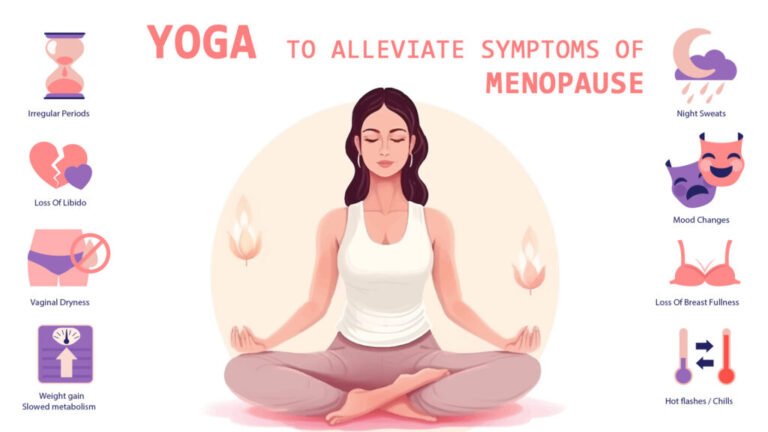
 YOGA TO ALLEVIATE SYMPTOMS OF MENOPAUSE

INTRODUCTION Menopause is defined as the permanent cessation of menstruation, resulting from a progressive reduction in estrogen and ovarian function levels. Women typically experience menopause after 12 consecutive months without menstruation, with the average age being 50 years. This significant transition in a woman’s life brings along a range of distressing symptoms that can last for several years. These symptoms include hot flashes, night sweats, insomnia, depression, anxiety, cognitive disturbances, and reduced quality of life. Menopause also increases cardiovascular risk and commonly leads to osteoporosis in women. While hormone replacement therapy is a traditional treatment option, it’s essential to discuss its potential side effects with a licensed practitioner. Given that menopause encompasses both physiological and psychological changes, therapies addressing both aspects are preferable. Complementary therapies like Yoga, physical exercise, acupuncture, and massage therapy have proven beneficial in improving sleep quality, mental health, and overall wellness during menopause. This blog delves into how Yoga can be a supportive tool during this pivotal phase in a woman’s life. ROLE OF YOGA IN MENOPAUSE Yoga, an ancient Indian philosophy, has long been celebrated for promoting physical, mental, and emotional wellness. The three primary practices in Yoga are physical postures (asanas), breathing exercises (pranayama), and meditation (dhyana). Given that stress often exacerbates menopausal symptoms, these mind-body practices can be invaluable in reducing stress and enhancing mood and overall well-being. Research has shown that Yoga can also diminish the severity of hot flashes and night sweats. The objective is to meld mental concentration with physical postures and exercises. For further insights, you can refer to studies on this topic here and here. ASANAS An Asana is more than just a mechanical posture. It’s a deliberate process that culminates in a balance between movement and resistance, resulting in steady and comfortable positions. Asanas offer physical activity, bolstered strength, and elevated energy levels, which can counteract post-menopausal weight gain. It’s crucial to tailor yogic exercises and poses to your fitness level. Start with basic Yoga postures to familiarize yourself with what feels best for your body. Once comfortable, you can progress to either a gentle or more rigorous routine. Some recommended asanas for alleviating menopausal symptoms include: Dandasana (Staff pose) Upavista Konasana (Seated wide-angle pose) Baddhakonasana (Fixed angle pose) Supta Baddhakonasana (Reclining fixed angle pose) Virasana (Hero pose) Supta Virasana (Reclining hero pose) For detailed techniques of these poses, refer to ‘YOGA: The Path To Holistic Health’ by B.K.S. Iyengar. Additionally, a case series discussing the impact of yoga on menopausal symptoms among women practicing Iyengar yoga can be found here. PRANAYAMA Controlled breathing exercises, or pranayama, transcend mere inhalation and exhalation cycles. They bridge our physiological and spiritual realms. Integrating pranayama into your daily routine can foster deeper relaxation, mitigate anxiety, and nurture positive thinking. Practices like Anuloma Viloma (Alternate nostril breathing), Viloma Pranayama (Interrupted breathing cycle), Diaphragmatic breathing, and Kapalabhati can be particularly beneficial for menopausal symptoms. DHYANA Meditation, or dhyana, serves as a tool to calm the mind by focusing attention on a single object, sound, concept, or experience. This practice enables us to momentarily disconnect from the daily stresses and responsibilities that often preoccupy our thoughts. Such a respite is especially vital during menopause. Techniques like Body Scan, Calm Abiding Meditation, Mantra Meditation, and White Tara Meditation can be particularly helpful. Evening meditation can notably enhance sleep quality, promoting restful nights. CONCLUSION Menopause can usher in a tumultuous period for many women. However, studies have shown that Yoga can have a positive impact on the psychophysiological shifts observed in post-menopausal women. Incorporating these exercises into your daily routine can alleviate menopausal symptoms, reduce stress, and combat depression. When combined with meditation, Yoga emerges as a promising complementary therapy to mitigate menopausal symptoms and elevate the quality of life.

Blogs

Yoga for Children with ADHD: A Holistic Alternative to Medication

Introduction: The Sleep Crisis and Yoga’s Solution In today’s technologically-driven society, where distractions are just a click away, ADHD (Attention Deficit Hyperactivity Disorder) has emerged as a significant concern, especially among the younger generation. While the medical community has made strides in diagnosing and treating ADHD, the most common approach remains pharmacological. These medications, though beneficial for many, can sometimes lead to undesirable side effects. In this context, yoga, an age-old practice that emphasizes the union of mind and body, presents itself as a holistic alternative. Rooted in ancient Indian traditions, yoga offers techniques that can help children with ADHD find their center in a chaotic world. This blog aims to shed light on how incorporating yoga into the daily lives of children with ADHD can pave the way for enhanced focus, reduced impulsivity, and a sense of inner peace. Understanding ADHD: Beyond the Hyperactivity ADHD is a complex neurodevelopmental disorder that goes beyond the stereotypical image of a hyperactive child. It’s a spectrum that includes a range of behaviors and challenges. Some children with ADHD may daydream excessively, making it hard for them to follow instructions, while others might struggle with impulse control, often acting without considering the consequences. These behaviors are not indicative of a child’s intelligence or potential but are manifestations of a brain that processes information differently. It’s crucial to recognize that children with ADHD aren’t just “misbehaving” or being “difficult.” They are navigating a world that often doesn’t align with their unique way of processing stimuli. Why Yoga? The Mind-Body Connection At its core, yoga is more than just a series of postures; it’s a philosophy that emphasizes balance, mindfulness, and the interconnectedness of mind and body. For children grappling with ADHD, this balance can often be skewed, making the grounding principles of yoga especially beneficial. The controlled breathing exercises in yoga, known as pranayama, can teach children to regulate their breath, leading to better emotional regulation. The physical postures, or asanas, can help channel their excess energy in a productive manner, improving their physical health and flexibility. Moreover, the meditative aspects of yoga can offer children tools to center themselves, reducing feelings of anxiety or overwhelm. A systematic review in the Journal of Child and Family Studies underscores this, suggesting that interventions like yoga can be particularly effective for youth with ADHD, providing them with strategies to cope in a fast-paced world. By integrating yoga into their routines, children with ADHD can harness its myriad benefits, fostering a sense of equilibrium and well-being. Yoga Poses Tailored for Children with ADHD Yoga, a practice that harmonizes the mind, body, and spirit, offers a range of poses that cater specifically to the needs of children with ADHD. As highlighted by the International Journal of Yoga Therapy, yoga can be a potent intervention for children grappling with attention challenges. Restorative Poses: Supported Child’s Pose: This pose encourages introspection and relaxation. By allowing children to curl up and turn their focus inward, it provides a safe space for them to disconnect from external stimuli and connect with their inner selves. Legs-Up-The-Wall Pose: Another restorative pose, this helps in calming the nervous system, reducing anxiety, and promoting relaxation, making it particularly beneficial for hyperactive children. Calming Poses: Forward Bend: This pose helps in stretching the back muscles, calming the mind, and promoting introspection. The act of bending forward can also symbolize letting go of stress and anxiety. Reclining Bound Angle Pose: By opening up the chest and promoting deep breathing, this pose can help children release pent-up energy and find a sense of calm. Breathing Techniques: Breathing exercises form the backbone of yoga. For children with ADHD, these techniques can be particularly beneficial. Alternate Nostril Breathing: This technique promotes balance and harmony. By channeling the breath through alternate nostrils, it helps in calming the mind, improving focus, and reducing anxiety. The Science Behind Yoga and ADHD The therapeutic potential of yoga for ADHD is not just based on ancient wisdom; it’s supported by modern science. Research from the Journal of Attention Disorders and Alternative Therapies in Health and Medicine underscores the benefits of yoga as a complementary treatment. These studies highlight that consistent yoga practice can lead to improvements in attention span, a reduction in hyperactive behaviors, and better impulse control. Real-Life Testimonials: Transformative Effects of Yoga on ADHD Scientific studies provide a foundation, but the real testament to yoga’s efficacy comes from real-world experiences. The American Academy for Yoga in Medicine (AAYM) is a repository of such transformative stories. Their extensive resources, from in-depth webinars to insightful blogs, offer glimpses into the lives of children and parents who have embraced yoga as a means to manage ADHD symptoms. These narratives not only inspire but also provide practical insights into how yoga can be integrated into daily routines. Conclusion: Embracing Yoga for Lifelong Wellness In a world where ADHD diagnoses are on the rise, yoga offers a ray of hope. This ancient practice, backed by both traditional wisdom and contemporary research, presents a holistic, non-invasive approach to managing ADHD. For parents and caregivers seeking alternatives to medication, yoga provides a path to enhanced focus, calmness, and overall well-being for their children. As we navigate the complexities of ADHD, perhaps the answer lies in the simplicity and depth of yoga.

Scroll to Top